Lab Checkoff System: A Better Way to Run Engineering Lab Queues and Grading

- Published on
- Domain
- Education tooling
- Focus
- Queueing and grading workflow
- Role
- Designer and developer
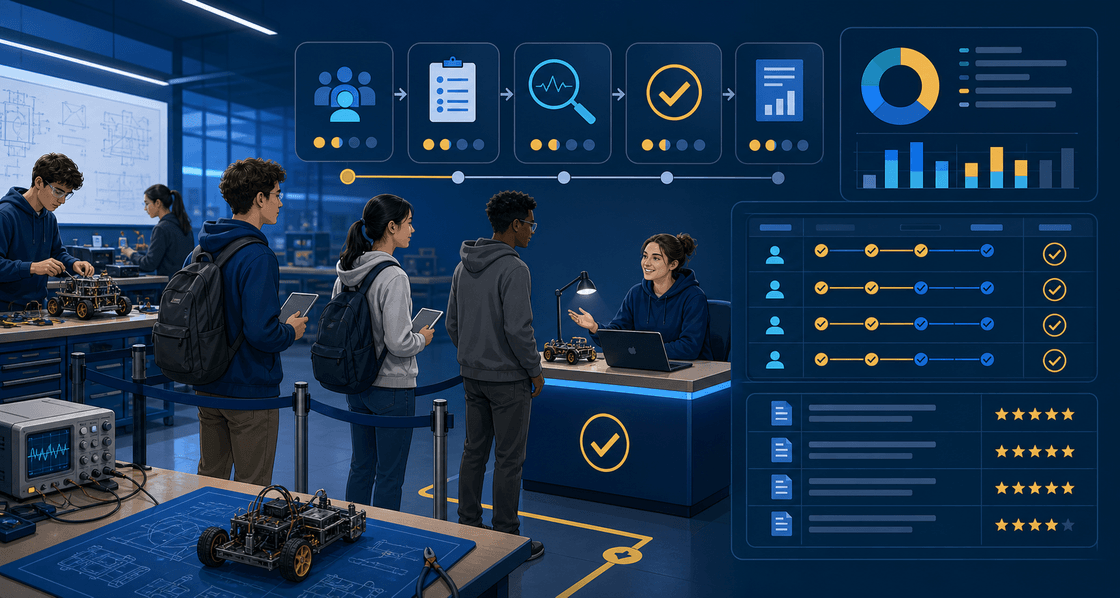
Lab Checkoff System: A Better Way to Run Engineering Lab Queues and Grading
Engineering lab checkoffs sound simple until twenty students need help at once.
This system helps labs manage checkoff queues, evaluation flow, and grading records without the usual bottlenecks, confusion, and improvised clipboard technology.
In a typical lab checkoff, students demonstrate a working design to a TA before getting credit.
That process often creates the same problems every week:
- long queues during busy lab periods
- inconsistent evaluation between TAs
- manual grade entry
- poor visibility into who is waiting and what already happened
That is the workflow this project was built to clean up.
In Plain English
Student is ready for checkoff
  -> system manages the queue
  -> TA follows a cleaner evaluation flow
  -> results stay recorded and easier to track
The goal is not fancy classroom AI wizardry.
It is better operations for a recurring teaching workflow.
What Makes It Different
Most lab checkoff processes rely on memory, paper notes, or a pile of disconnected steps.
This project turns that routine into a structured web workflow with clearer records and less ambiguity.
Busy lab hours are not the ideal time to discover your grading process was mostly vibes.
Design Objectives
The system was designed to:
- reduce wait times during crowded lab sessions
- standardize the evaluation process across TAs
- simplify grade recording and instructor oversight
- preserve a clear record of completed checkoffs
Why It Matters
Good education tooling is often just good operational tooling wearing a backpack.
When checkoffs run more smoothly:
- students spend less time waiting around
- TAs get a clearer process
- instructors get better records
- grading becomes more consistent
That makes the course feel better for everyone involved.
Result
The project turned a manual classroom workflow into something more predictable and scalable.
It is a practical example of full-stack engineering applied to a real educational bottleneck, with the value coming from clarity and usability more than novelty.
What Is Next
The core workflow proves the system direction.
The next improvements would be:
- better instructor visibility into queue state and outcomes
- smoother TA-facing evaluation views
- cleaner reporting for course staff
The dream is pretty modest and pretty useful: fewer students standing around wondering when their turn is, and fewer TAs juggling process in their head.