ARGH: A Drone Imaging Recorder Built to Keep Capturing Through Harsh Conditions

- Published on
- Duration
- 9 Months
- Role
- Lead Engineer
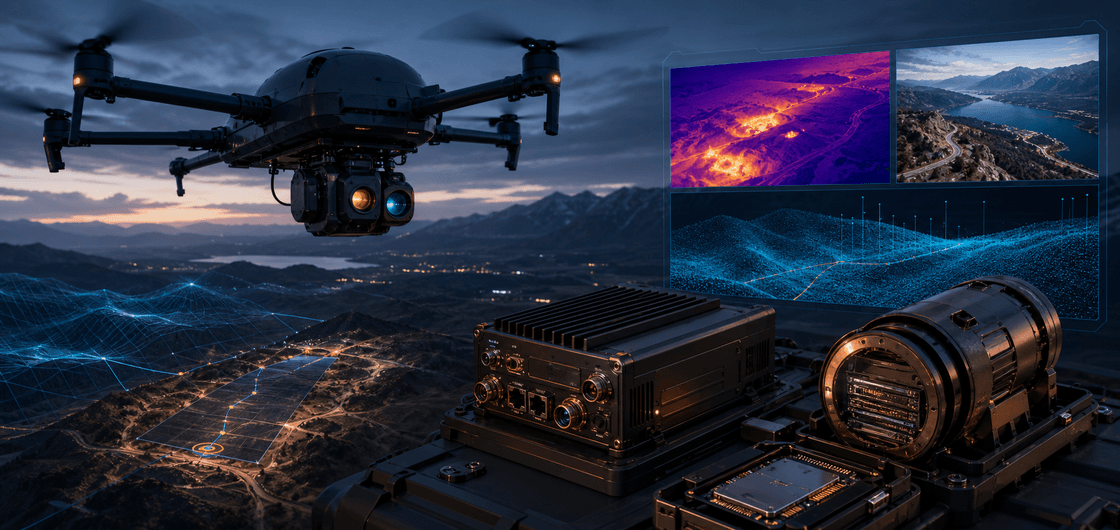
ARGH: A Drone Imaging Recorder Built to Keep Capturing Through Harsh Conditions
Capturing aerial survey data sounds straightforward until the system has to keep working in the air, on embedded hardware, for long stretches, without babysitting.
ARGH was built as a graphical history recorder for large drones, designed to capture and organize image data from multiple cameras so it can be reviewed after a mission.
The practical challenge was reliability.
This kind of system has to:
- record from more than one camera source
- store large volumes of image data
- keep everything organized
- survive unstable power conditions
- continue operation without needing a monitor or attached laptop
That is a lot to ask from one embedded system flying around on a drone.
In Plain English
Drone mission runs
  -> cameras capture visual data
  -> ARGH records, stores, and tracks it
  -> operators can review the imagery later
The project was developed in collaboration with Collins Aerospace for aerial reconnaissance and survey-style workflows.
What Makes It Interesting
The hard part was not just capturing images.
The hard part was making the whole system dependable enough to record for long periods, recover from power problems, and keep multiple moving pieces working together on an Nvidia Jetson AGX Xavier platform.
Embedded systems are always more fun when "please do not lose the data" is part of the job description.
What The System Does
ARGH was designed to:
- record data from a GigE Vision camera
- record data from a USB3 thermal camera
- save and organize large streams of captured imagery
- monitor data collection health
- support preset recording delays and durations
- continue from the last known recording state after a power interruption
That last part mattered a lot because the drone-side power environment was not guaranteed to be perfectly stable.
Technical Design
The system used forking and multithreading so one primary executable could coordinate:
- both camera recording programs
- a storage management process
- the user interface
- the local display workflow
This allowed the device to be configured without a persistent external computer and then later run autonomously once attached to the drone and its power source.
The result was a workflow where the system could be powered on, configured by a user, and then left to handle timed recording automatically.
What Was Hard
The biggest engineering challenge was getting the full stack of hardware and software components to behave as one dependable system.
The recorder needed to remember state cleanly enough that a power loss would not ruin an entire mission segment. That meant persisting the right variables and resuming from the correct recording position after restart.
In other words: less "oops," more continuity.
Result
ARGH turned a demanding aerial recording requirement into a practical embedded system built for real operational constraints.
It was a strong systems-engineering exercise in concurrency, persistence, storage coordination, and reliability under imperfect hardware conditions.
Links
For the most up-to-date project information and detailed documents: